Elevating Digital Personality: The Strategic Impact of Game Stage in Modern Design
In the rapidly evolving landscape of digital communication, typography has transcended its traditional role as a mere vessel for information. It has become a primary driver of brand identity, emotional resonance, and user engagement. Among the myriad of typefaces emerging to meet the demands of this new era, Game Stage stands out as a compelling example of how aesthetic choices can align with broader cultural and market trends. This arcade display font, characterized by its unique and playful style, offers more than just visual appeal; it provides a strategic tool for creators, entrepreneurs, and marketers looking to inject vitality into their projects.
The Anatomy of Playful Precision
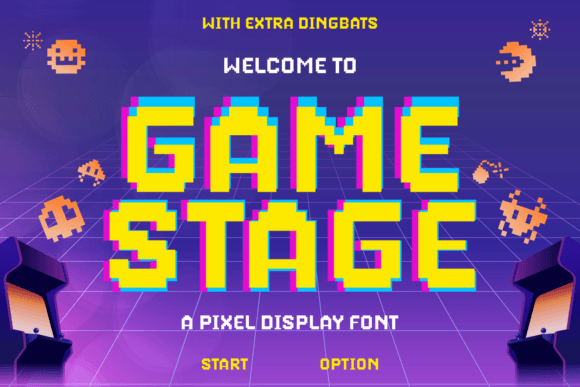
At its core, Game Stage is defined by its chunky shapes and playful angles. These design elements are not arbitrary; they are carefully constructed to exude a sense of fun and excitement that resonates deeply with contemporary audiences. The bold strokes command attention, ensuring that headlines and logos stand out in crowded digital environments, while the bright colors often associated with its usage add a necessary touch of personality and vibrancy. This combination creates a typographic voice that is both authoritative and approachable, a rare balance in the world of display fonts.
What truly sets Game Stage apart in a technical sense is its PUA (Private Use Area) encoding. For professionals who rely on efficiency and creative freedom, this feature is transformative. PUA encoding means that users can access all glyphs and swashes effortlessly without the need for complex keyboard shortcuts or character map hunting. This seamless accessibility streamlines the workflow for graphic designers and content creators, allowing them to focus on the artistic composition rather than technical hurdles. In an industry where time is a critical resource, such functional elegance is a significant value proposition.
Aligning with the Nostalgia Economy
The rising prominence of fonts like Game Stage cannot be viewed in isolation; it is part of a larger shift within the consumer market known as the "nostalgia economy." As digital experiences become increasingly polished and sometimes sterile, there is a growing consumer appetite for designs that evoke warmth, memory, and human connection. The retro-futuristic aesthetic of arcade culture taps directly into this sentiment. By incorporating a font that adds a playful and nostalgic touch to any project, brands can leverage collective memories to build instant rapport with their audience.
This trend is evident across various sectors, from tech startups aiming to soften their corporate image to lifestyle brands seeking to differentiate themselves through whimsy. Marketers are increasingly recognizing that humor and playfulness are not just entertainment values but powerful engagement drivers. When a potential customer encounters a headline set in Game Stage, the immediate psychological response is often one of curiosity and delight. This breaks down the barriers of skepticism that modern consumers have developed against traditional advertising, making the message more receptive.
Adapting to Changing Workflow Expectations
The modern creative workflow demands tools that are as flexible as they are beautiful. Freelancers and agencies alike are managing projects across multiple platforms, from social media graphics to large-scale print campaigns. The versatility of Game Stage makes it an ideal candidate for this multi-channel reality. Its bold structure ensures legibility even at smaller sizes on mobile screens, while its decorative swashes allow for elaborate customization in static imagery.
Furthermore, the expectation for rapid turnaround times has never been higher. Clients expect high-quality, custom-looking results in shorter timelines. The PUA encoded nature of Game Stage directly addresses this pressure. By eliminating the friction typically associated with accessing alternate characters, designers can iterate faster. They can experiment with different ligatures and stylistic sets in real-time, presenting clients with varied options without extending the project timeline. This alignment with the speed of modern business operations makes the font a practical asset, not just a stylistic choice.
Strategic Applications Across Industries
To understand the full potential of Game Stage, one must look at its application in real-world scenarios. Consider the gaming industry, where the font's origins lie. While it fits naturally here, its utility extends far beyond game titles. In the food and beverage sector, craft breweries and artisanal coffee shops are using similar playful typography to signal approachability and creativity, moving away from the minimalist sans-serifs that dominated the previous decade.
In the realm of education technology, platforms aimed at younger demographics are adopting fonts with chunky shapes to make learning interfaces feel less intimidating and more inviting. Here, the playful angles of Game Stage serve a functional purpose: reducing cognitive load by creating a friendly atmosphere. Similarly, in event marketing, festival posters and concert flyers utilize the vibrant energy of such typefaces to convey the excitement of the live experience before a single ticket is sold.
Entrepreneurs launching direct-to-consumer brands are also leveraging this aesthetic. In a saturated e-commerce market, packaging design is a crucial touchpoint. A product box featuring the bold strokes and unique personality of Game Stage stands out on a shelf or in an unboxing video, encouraging social sharing. This organic promotion is invaluable in an era where user-generated content drives significant portions of sales.
The Future of Expressive Typography
As we look toward the future of design, the trajectory points toward even greater personalization and expressiveness. The rigid grids of the past are giving way to fluid, dynamic layouts where typography acts as the primary graphical element. Game Stage exemplifies this shift. It is not merely a font to be read; it is a graphic element to be experienced. Its ability to carry color and texture within its very forms allows designers to treat text as imagery.
Moreover, the technology behind font delivery is evolving. With web fonts becoming more sophisticated and variable font technology gaining traction, the accessibility of complex glyphs via PUA encoding ensures that fonts like Game Stage remain compatible with cutting-edge web standards. This forward-looking compatibility ensures that investments in such typefaces are secure, protecting designers from obsolescence as browsers and devices update.
Why the Market is Paying Attention
The attention surrounding Game Stage is a reflection of a broader fatigue with generic design. In a world where templates and AI-generated content are becoming ubiquitous, the human touch conveyed through distinctive typography is more valuable than ever. Professionals are seeking assets that offer a unique signature, something that cannot be easily replicated by standard system fonts. The specific character of Game Stage—its specific blend of retro charm and modern boldness—provides that distinct signature.
Additionally, the psychological impact of color and shape is being taken more seriously in branding strategies. The "bright colors" often paired with this font style are not just decorative; they are strategic choices that influence mood and behavior. Brands are realizing that the right typeface can subtly guide user emotion, leading to higher conversion rates and stronger brand loyalty. The playful nature of Game Stage signals innovation and confidence, traits that consumers associate with market leaders.
Conclusion: A Tool for the Modern Creator
In conclusion, Game Stage represents more than a trend in arcade aesthetics; it is a response to the changing needs of the digital ecosystem. It bridges the gap between nostalgia and modernity, offering a visual language that is both familiar and fresh. For professionals, creators, and entrepreneurs, it offers a practical solution to the challenge of standing out in a noisy market. Its PUA encoding ensures technical ease, while its chunky shapes and playful angles ensure emotional impact.
As the boundaries between entertainment, commerce, and art continue to blur, the tools we use to communicate must evolve. Fonts that offer personality, vibrancy, and technical flexibility will define the next generation of visual communication. Game Stage is perfectly positioned to lead this charge, providing a foundation for projects that demand not just to be seen, but to be felt. By integrating such expressive tools into their workflows, designers and marketers can create experiences that resonate on a deeper level, turning passive viewers into engaged participants.
The journey of typography is ongoing, and the stage is set for fonts that dare to be different. With its unique style and robust feature set, Game Stage invites creators to step into a space where fun and function coexist, driving the industry forward with every bold stroke.